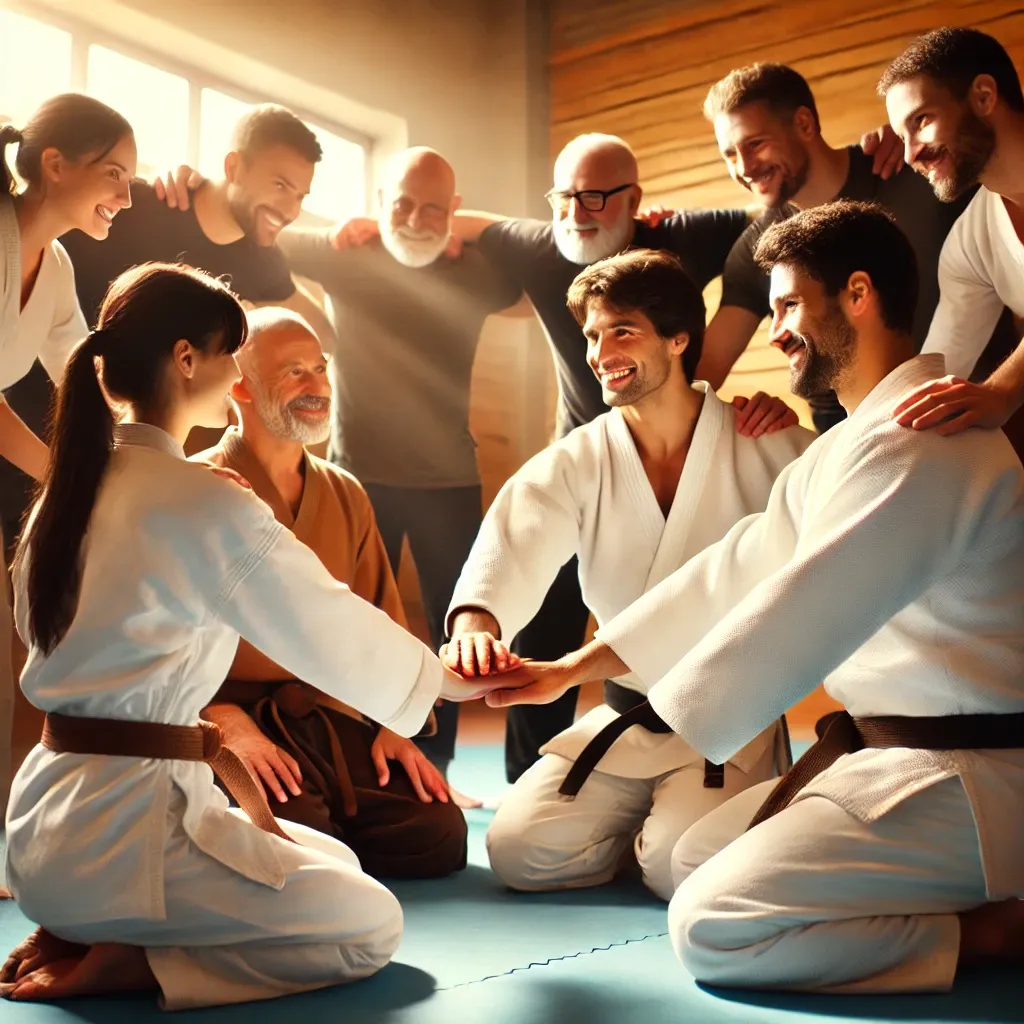
We’ve covered on-yu (온유) and gi (기); now it’s jeong (정), the Korean bond that ties us together. In CKD, it’s the “Pil Seung!” spirit: helping, not just fighting. Your posture doesn’t just fix you; it lifts everyone around you. Let’s see how jeong (정) works.
Jeong (정) in CKD: Warmth That Spreads
Jeong (정) is CKD’s community vibe: warmth you project. A 2018 Harvard study found open postures make you likable and calm others’ stress (Health Psychology, 2015). Emotional contagion research (Hatfield, 1993) says they’ll mirror your ease: jeong (정) in action. In Choi Kwang Do, it’s the pil seung / school spirit: helping each other, not just fighting. Jeong (정), a deeply Korean concept, is about the warm, emotional bond that connects people: think of it as affection, loyalty, or a sense of “we’re in this together.” In the context of Choi Kwang Do (CKD), jeong isn’t just a feeling; it’s something you project and share through how you carry yourself. It influences others by creating trust, easing tension, and fostering a sense of belonging.
How Jeong (정) Affects Others
- You Signal Warmth and Approachability
- You Lower Their Stress
- You Build Connection Without Saying Much
- You Inspire Confidence in Them
- You Counter Modern Disconnect
Modern Life’s Disconnect
Phones and slumps kill jeong (정). Adults scroll instead of talk; kids game alone. Social isolation spikes stress (Holt-Lunstad, 2015), but CKD community fights back: jeong (정) bridges the gap.
Jeong (정) isn’t fluff; it’s CKD’s quiet power. In a disconnected world, that’s gold.
Jeong works hand in hand with Gi: read about the energy that flows in Choi Kwang Do.
Want to know more about the art behind this? Read what Choi Kwang Do is, or try our family martial arts classes, where parents and children aged 7 and over train together at our Wandsworth studio.
Want to try martial arts for yourself or your child? Book a trial class at our Wandsworth studio.
Book a Trial Class